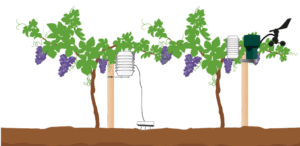
Previously on our blog we have discussed the general relationship between air temperatures and the growth of plants. Let’s revisit the most important point: plants grow only after a certain biological minimum of surrounding temperatures has been met, while their growth is a direct response to the amount of heat they accumulate throughout each growing season.
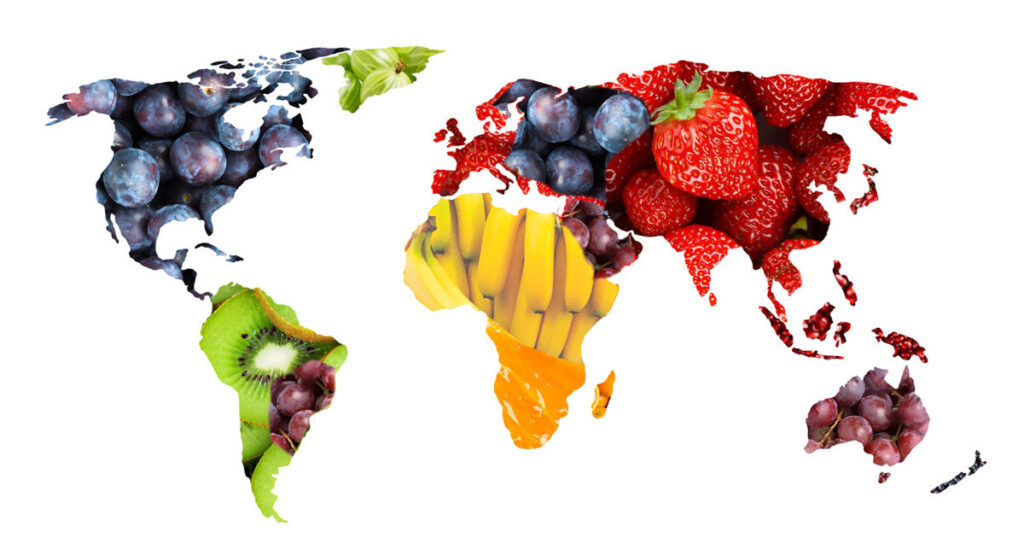
If we link these facts to the variety of climate areas that our beloved planet hosts, it is clear that different climates will be able to deliver only so much energy needed for the growth of plants. Therefore, the plants with lower initial growing thresholds and lower energy needs will be widespread and more capable of thriving across the entire globe. And others will be restricted to only certain climatic zones that can fulfill their energy needs.
Setting aside wild plants, which are important for the overall life balance of our planet, plants are grown by humans mostly for food. Or to be more specific – for different industrial needs, food being one of them. The economic importance of growing plants is therefore evident, and more yield per area is considered a positive fact for most plants, as it creates more economic value.
What makes wine grapes different?
Wine grapes, however, do not adhere to those rules. They are grown for their miraculous ability to condense aromas during their development. With this interesting ability the grapes enable the many faces of wine as a product, and the diversity of the wine industry around the world.
How do grapes manage this is still a bit of a mystery and out of the scope of this post, but the important takeaway is that the micro location where wine grapes grow is considered to be a significant contributor to the aromas, the other being the grape varietal itself. The wine grapes are therefore grown for their quality, with yields that make such a production economically viable, while the yield is not the primary goal in this specific case.
Is it better to rely on experience or data?
So how does one match a specific location and a specific grape varietal with aromatic potential. For a long time, the answer has been reached through trial and error or based on previous experience. Stories from various countries, primarily France, say that the top performing vineyards of today have been vineyards for centuries. Each generation of growers has been slowly experimenting until only the best specimens of wines, used for clonal selection, of the best suited varietal for a specific micro location have emerged.
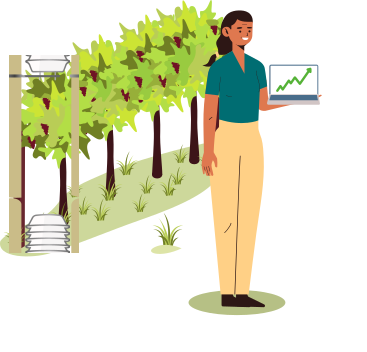
Although it is quite difficult to imagine a two-century long experiment, it should not be discarded as completely impossible. There were simply no other means to achieve the best possible match for a particular microsite. Fortunately, today we have the tools, primarily in the form of various viticultural indices, which enable us to shorten this process dramatically, if not to achieve an immediate match.
Coupled with other contemporary climate and field management techniques, it is no wonder that geographical latitude for winegrowing has moved beyond the traditional limits between the 30th and 50th parallel. We will look at these indices in more detail in our upcoming blog posts.