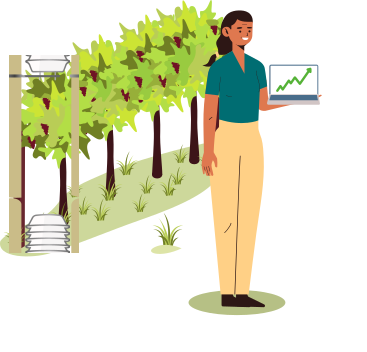
The season is underway — and precision vineyard protection is more important than ever
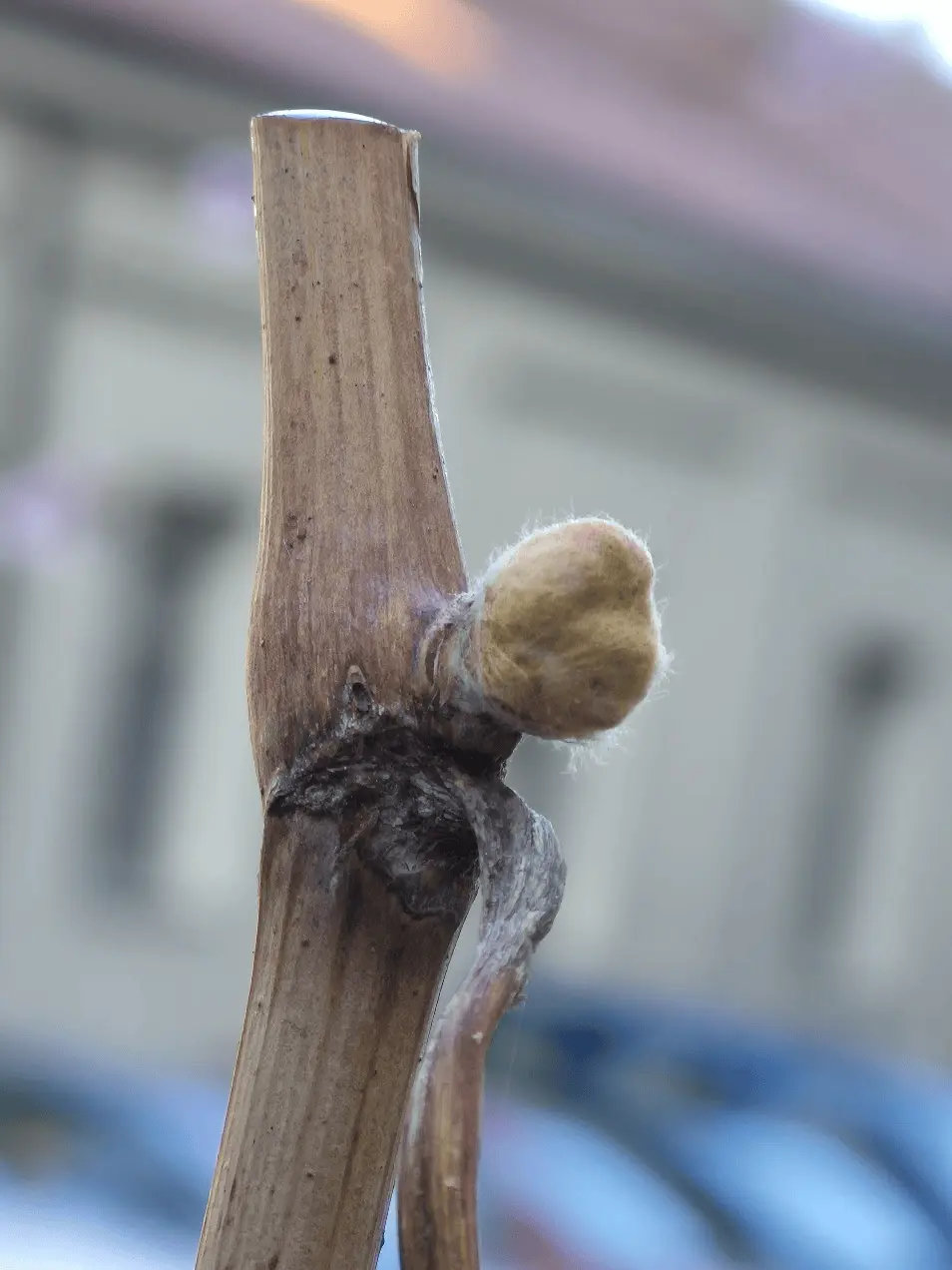
The season is already well underway, and judging by what we’ve seen in the first few weeks, the prerequisites for a solid year are certainly there. Over winter, the vines accumulated sufficient “chilling hours” — hours with temperatures between 0°C and 7°C — ensuring proper dormancy. Late March brought some temperature fluctuations that could have caused uneven budbreak at certain sites, but adequate rainfall kept things on track. It is precisely in conditions like these that precision vineyard protection shows its full value: instead of reacting out of habit, we respond based on real data from the parcel.
But we didn’t write to talk about the weather. We wanted to share something very concrete, something that genuinely surprised us last season.
Organic vineyard. Three sprays. Ražanj.
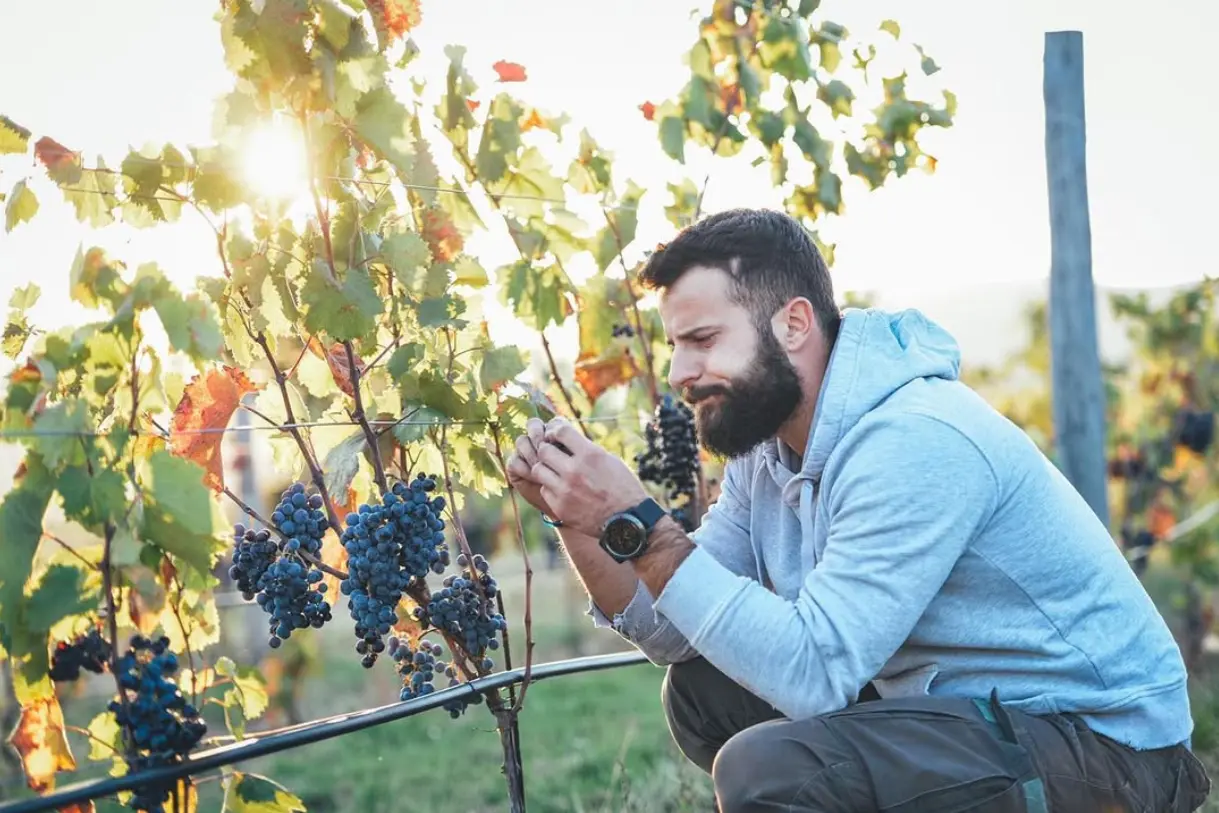
Aleksandar, a grower from Ražanj with years of experience in organic viticulture, sprayed his vineyard just three times last season. For an organic vineyard in Serbia — where the average ranges from six to eight spray applications per season, and in harder years even more than 10, that number is rarely seen. Even in warmer regions like North Macedonia or northern Greece, three applications with organic inputs is an exceptional result.
So what happened? Was it luck, a favorable season, or something else?
Last season’s weather played in his favor
We have to be honest. Last season, taken as a whole, was easier than average. Disease pressure was lower, and the distribution of rainfall was more favorable than usual, that some vineyards even needed irrigation. That must be said, because any other conclusion would be misleading.
But that is only part of the story.
What led us to do a detailed analysis of Aleksandar’s approach was something else entirely — the confidence to hold off spraying when everyone around him was reaching for the sprayer. That confidence doesn’t come from luck. It comes from knowledge, data, and trust built over years of using Winessense.
Three pillars of precision vineyard protection
1. Knowing your own parcel
Aleksandar knows his vineyard very well. He knows where moisture lingers after rain, where the wind dries the canopy within two hours, which rows the morning dew hits first. That knowledge doesn’t come from textbooks — it accumulates over years of walking the rows, observing, and acknowledging.
This intimate understanding of the parcel is the first line of defense in any system of precision vineyard protection.
2. Real-time microclimate monitoring
5 Winessense sensors were installed across Aleksandar’s vineyard — strategically placed at different points on the parcel to capture the full variability of the microclimate. The sensors monitor:
- Air temperature
- Relative humidity
- Rainfall volume and intensity
- Wind speed and direction
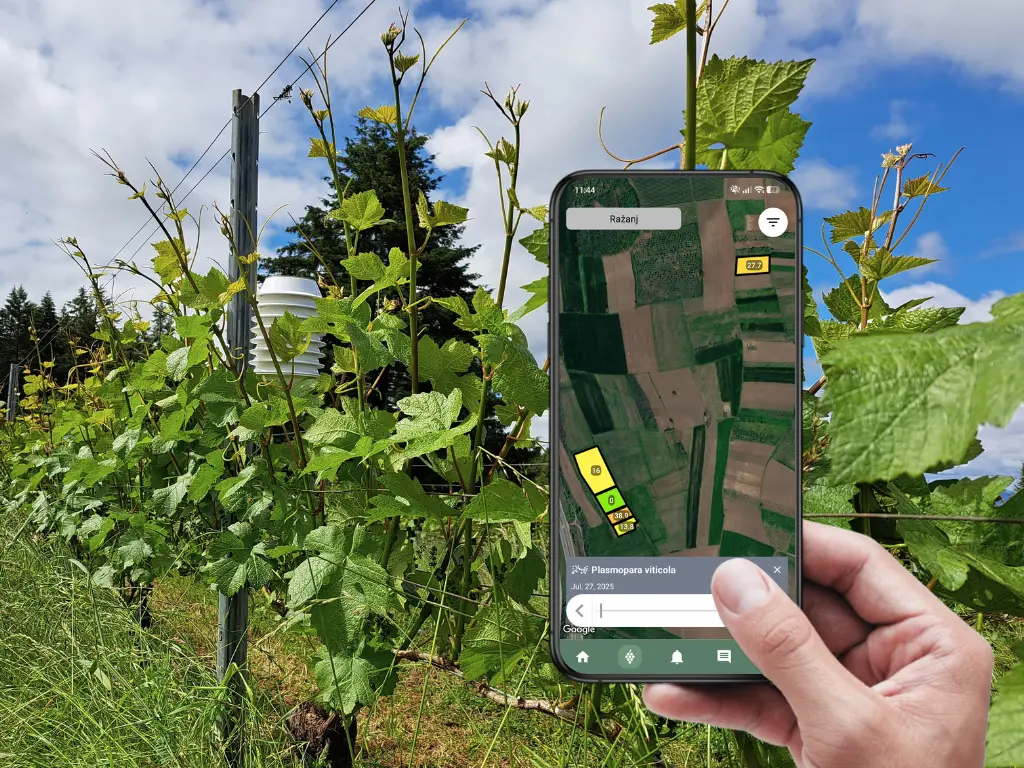
Of course, raw data alone is not enough. Above the measurements themselves, models for vine phenology and disease risk run in real time, showing whether the infection period for downy mildew is active, whether powdery mildew is under pressure, and what phenological stage the vine is currently in. Only then does data become a tool for decision-making.
You can read more about the other disease models and capabilities of the Winessense system here.
3. Experimentation and calibration
The third — and perhaps most important — step is what Aleksandar does with all that information. Already after his second season comparing what he saw in the field with what the data showed, he learned to recognize when the app was signaling caution — and when he could wait.
That is how he reached a point where he sprays exactly when needed. Never skipping a necessary application — but never adding an unnecessary one either. Fully in line with the principles of organic production: less is more.
Watch his experience with Winessense on YouTube.
The role of biostimulants: seaweed and minerals
One important detail from Aleksandar’s protection program deserves mention: alongside copper and sulfur — the foundational inputs of organic disease management — his program includes preparations based on seaweed and minerals. These biostimulants work on the vine’s own resistance, strengthening cell walls and natural defense mechanisms. The vineyard becomes less susceptible to disease, and every application carries a dual effect: direct protection and long-term building of plant resilience.
This is a dimension of precision vineyard protection that rarely gets the attention it deserves.
Why is this possible now — and why wasn’t it before?
Precision vineyard protection is not a new idea. Growers have always known that spray timing is critical. What is new is the ability to base that timing on precise, site-specific microclimatic data — rather than regional forecasts or experiences from someone else’s parcel.
Every vineyard is unique. The influence of microrelief, aspect, neighboring woodland, and drainage — all of these factors mean that the same weather event in two adjacent vineyards can represent entirely different levels of disease risk. That is precisely why precision vineyard protection must start from measurement, not assumption.
What can we learn from Aleksandar’s approach?
His story has three layers.
The first is dedication. He knows his vineyard from the inside. Where moisture settles, where the wind dries the leaves, which rows the dew reaches first. That is not learned from a book.
The second is measurement. Winessense sensors placed across the parcel track temperature, humidity, rainfall and wind. But the raw data is not the key — the key are the phenology and disease models that show in real time when the downy mildew infection period is active, when powdery mildew pressure is building, and when the vine is entering a critical growth stage. Only then does measurement become a decision.
The third is experience. Using the system season after season, Aleksandar confirmed that the models showed exactly what he would have seen himself if he had been in the vineyard at all times. That trust gave him something more valuable than data — he learned when he could wait and when he had to act. That is how you spray exactly when needed. Not once more than necessary.
Conclusion: the grower, not the tool
There are always multiple factors at play. There is no single trick for a successful season. Last season had to be favorable, the grower had to be dedicated, the vines had to be healthy, and the site had to be well-positioned.
But the most important factor remains the person — and their commitment to the task. Sensors and models do not make decisions for the grower. They give him the foundation to make the decisions he was already making — more accurately, earlier, and with greater confidence. Precision vineyard protection, in the end, is not technology for technology’s sake — it is a tool in the hands of an attentive grower.
If you are thinking about managing your vineyard with more precision and less guesswork, the Winessense system is available to order. We handle installation together with you, on your parcel, with your microclimate in mind.
If you found this useful, share it with other growers in your area. Every parcel deserves its own data.