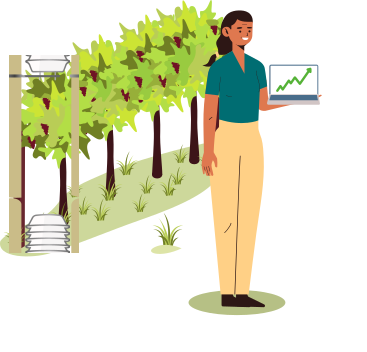
Microclimate, as the name implies, is a small area with specific climate conditions. Or, not?
The Definition
The accurate definition is a local climate that differs from the surrounding one. There is no consideration of area size here at all. It is the difference that matters. Thus, the micro here is not one millionth part of something, as it may come across.
The Background
This is surely not the first text on the subject. And, yes, an interplay of vineyards and microclimates is an everlasting topic. A good overview by The Wine Enthusiast Magazine will get you up to speed.
The Facts and the Data
We have already looked at some of the general microclimate data and effects in our previous posts on temperature differences and the importance of in canopy measurements. The attention in this piece goes to 3 aspects of vital importance to a lifespan of a vineyard during any season.
Temperature variability during frosts
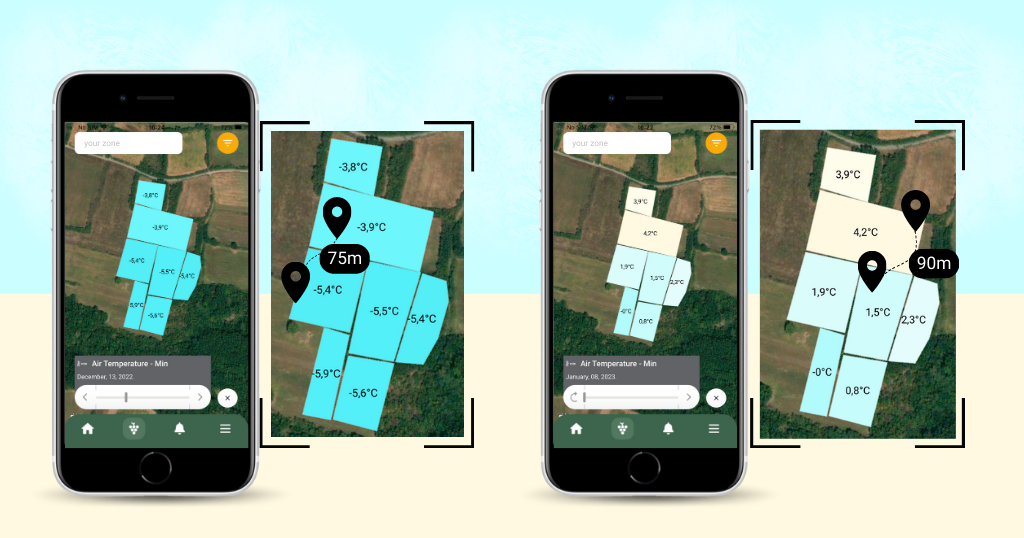
The frost is a peculiar event, during which there is no wind. This allows for manifestation of all other local climatic factors. The results are a difference of 3°C (6°F) in temperatures across distances of 80-150m. If such an event is to occur after the bud break, it could mean life or death to a vine shoot. And less shoots equals to less fruit this and the next season.
Relative air humidity duration
Neighboring vineyard sections often experience different values of relative humidity. This happens 30% or more times. Ultimately, this indicates disease prone spots. In challenging years, these spots cause an undesired disease outbreak. And nobody is happy if diseased grapes end up being an input to a cellar.
Maturity variation
Temperature differences, accumulated during a season, correspond to different maturity levels, altogether. This can even be 7-10 days. In a year with enough heat and favorable conditions this could become an advantage. On the other hand, in a challenging, perhaps a lagging year, this can cause a problem. A problem extending to a level that the wine style becomes completely limited by this effect.
What Does it all Mean
It is certain that climate is an undisputed part of any terroir. Does it mean that there is the best microclimate for the best outcome? Perchance. The last question implies a brave assumption that demands for a broader scientific proof. What is certain, though, the people that work the vineyards are aware of the differences. They are always trying to find the best thriving spots for their vines. There is no good reason why any climate concerned grape grower would not do the same. Especially now as our winessenseⓇ microclimate tools for winegrowing are more accessible.